Can I Build on This Commercial Property in Western Kentucky?
A commercial property can have the right location, enough acreage, and an attractive price and still be a poor fit for the project you want to build. At Nationwide Property Development, we work on excavation and site preparation projects throughout Western Kentucky, and we know that understanding a property's physical limitations early can help prevent costly surprises during development.
Before buying land for commercial development, look beyond the listing. The intended use, zoning, usable site area, access, utilities, drainage, topography, easements, and likely site-development work can all affect whether the property makes sense.
The goal is not simply to answer, “Can something be built here?” A better question is, “Can this property realistically support the project I have in mind?”
Start With the Project, Not the Property
Before deciding whether a piece of commercial land works, define what the project actually needs.
A retail business with regular customer traffic has different site requirements from a warehouse receiving truck deliveries. A restaurant may have different utility and parking demands than an office building. A business that expects to expand later may need more usable land than its initial building footprint suggests.
Before evaluating a site, have a general understanding of:
- The proposed use and approximate building size
- Parking and circulation needs
- Customer, employee, and delivery access
- Loading or outdoor-use areas
- Utility requirements
- Potential future expansion
In our excavation and property development work, one of the most useful things we can do early is look at the land in the context of what the owner actually wants to accomplish. A parcel should not be evaluated simply as “good commercial land.” It needs to make sense for the specific project.
Is Your Intended Use Allowed on the Property?
A property being described as commercial does not mean every commercial use is automatically allowed there.
Zoning districts establish which uses are permitted and can also affect setbacks, building placement, lot coverage, buffers, and other development requirements. Some projects may require additional review or approvals.
Within Murray, for example, different zoning districts have their own permitted and conditional uses and development standards. Requirements can differ elsewhere in Western Kentucky, so the appropriate local planning authority should be consulted for the specific property.
If the current zoning does not match the intended use, do not assume rezoning, a variance, or another approval will automatically solve the problem. If the project depends on an approval that has not happened yet, that uncertainty should be understood before making the property decision.
How Much of the Property Can You Actually Use?
Total acreage and usable development area are not the same thing.
A building is only one part of a commercial site. Depending on the project, the property may also need room for parking, drive aisles, loading areas, landscaping or buffers, utilities, setbacks, drainage infrastructure, and other site features.
Easements, drainage areas, an unusual lot shape, or other constraints can further affect how much of the property actually works for the proposed development.
This is why there is no reliable universal answer to a question like, “How many acres do I need for a 10,000-square-foot commercial building?” Two projects with the same building size can require very different sites.
Before buying based on acreage alone, consider how the entire property would need to function.
Access Matters More Than Road Frontage
Road frontage does not automatically mean a property has the access your business needs.
Think about how customers, employees, deliveries, and emergency vehicles will move onto and around the site. For businesses receiving larger trucks, turning movements, loading access, and internal circulation can become especially important.
The road itself matters too. If proposed access affects a state-maintained highway, Kentucky Transportation Cabinet requirements may apply.
A property can be highly visible from a busy road while still present challenges for the entrance or circulation pattern the project requires. Access can also become part of the physical site work once development begins, which is why our excavation and site preparation services address more than simply moving dirt.
Are the Utilities Actually Available?
Do not assume utilities are available simply because nearby properties have service or utility infrastructure is visible along the road.
The City of Murray specifically advises prospective builders not to assume all utilities are available at a building site. That is a useful reminder for anyone evaluating commercial land: verify what the specific property can actually support.
Depending on the project, investigate water, wastewater or sewer, electricity, natural gas where applicable, and telecommunications needs.
The questions go beyond “Is there a line nearby?” You may need to determine where service can connect, whether appropriate service is available for the proposed use, and what extending or establishing service could involve.
For some commercial properties, utility considerations can materially affect both the site plan and development budget.
Where Will the Water Go?
Drainage should be considered before buying commercial land, not after grading starts.
Look at how water currently moves across the property, where low areas occur, and how development could change those patterns. A future building, parking lot, and other hard surfaces can change how stormwater moves through a site.
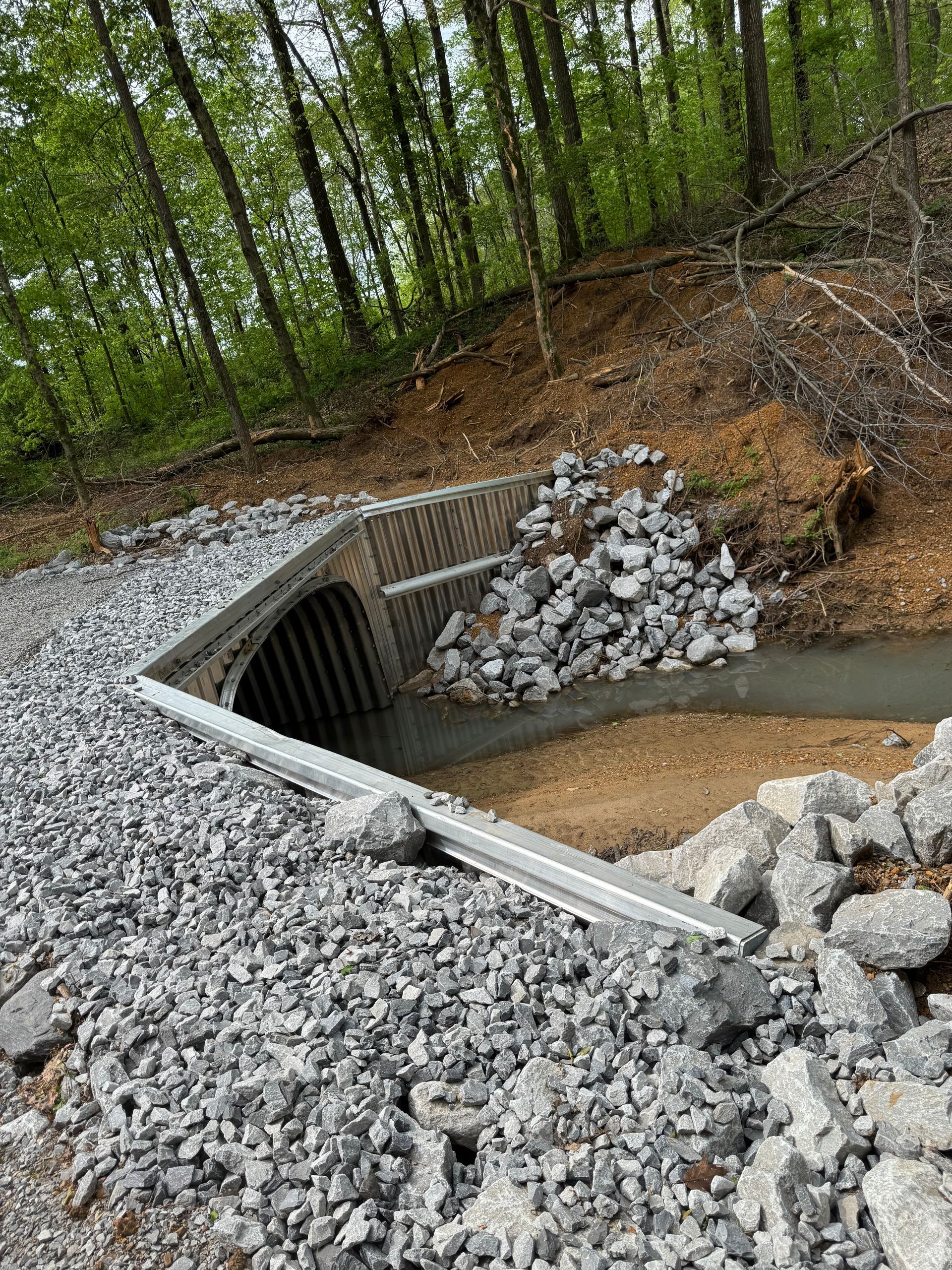
Depending on the property and jurisdiction, development requirements may also involve stormwater conveyance, erosion control, detention, culverts, drainage infrastructure, or floodplain conditions.
One mistake is evaluating a property only on a dry day and assuming drainage will be straightforward. Understanding how the site handles water can influence the layout as well as the amount of grading, drainage, and other site-development work required.
Our broader property development services include drainage and erosion solutions alongside excavation and grading because these parts of a site often need to be considered together.
What Will the Terrain Mean for Development?
Land does not have to be perfectly flat to support commercial construction, but its topography can have a major influence on what it takes to prepare the site.
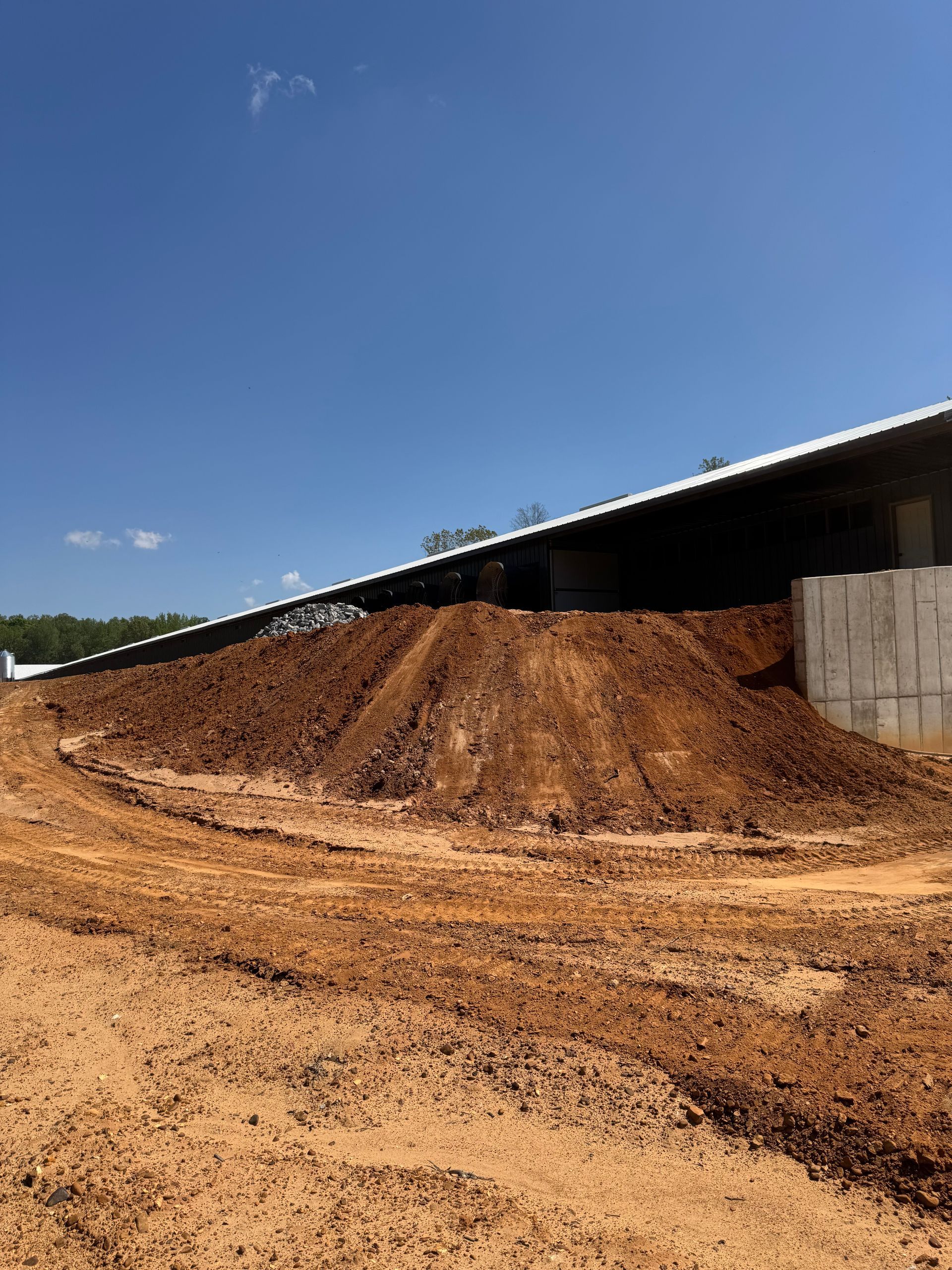
Slope and elevation changes can affect grading, cut and fill, drainage, access, and building-pad preparation. In some situations, substantial earthmoving or other site work may be necessary before vertical construction can begin.
Visible terrain is only part of the evaluation. Soil and subsurface conditions may require investigation by the appropriate professionals.
From an excavation and grading perspective, the useful question is not simply whether the site looks buildable from the road. It is how the existing ground relates to the proposed building, parking, drainage, and access plan.
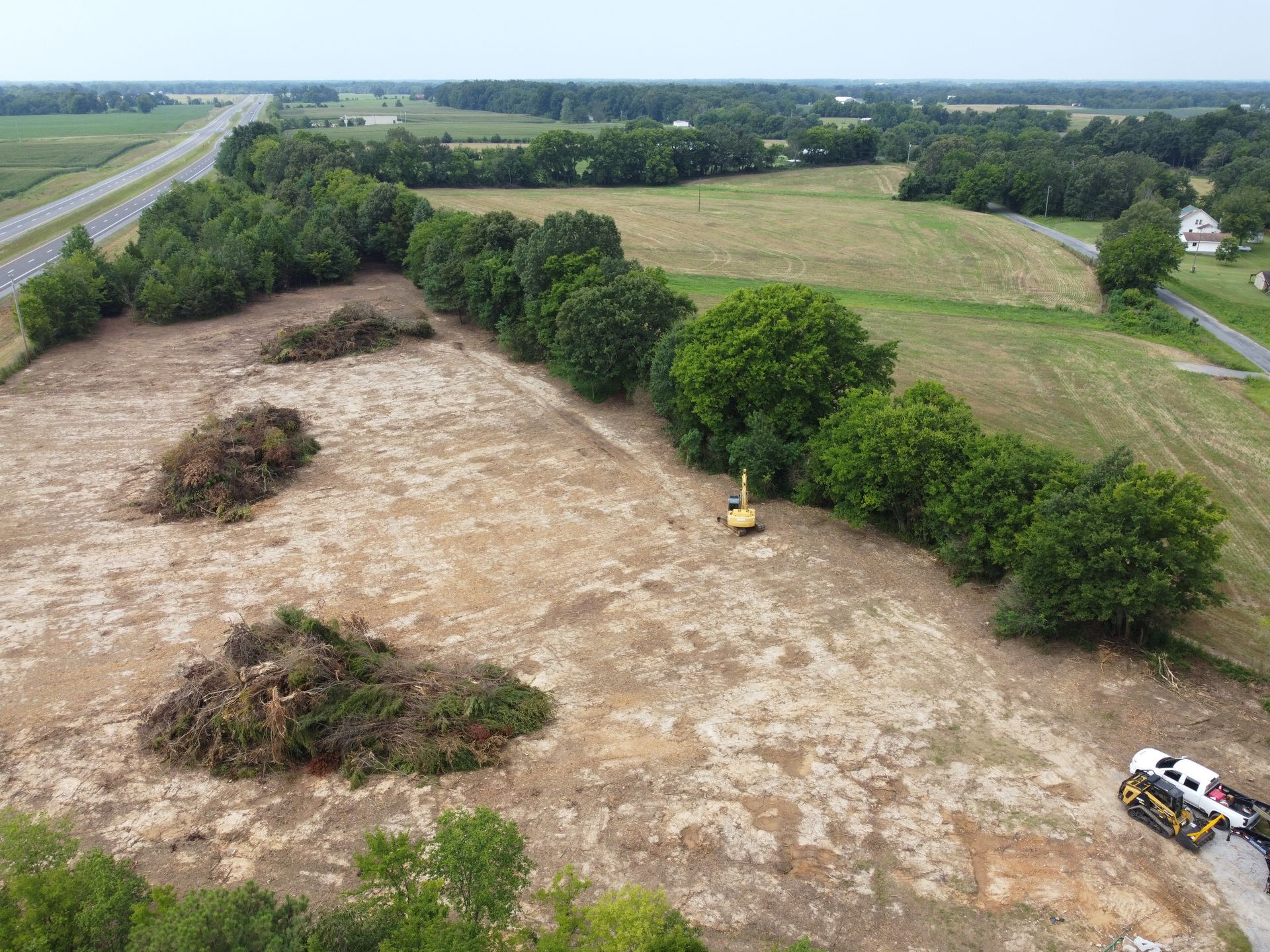
For a wooded or heavily overgrown property, vegetation can add another step before site work begins. Our land clearing services can prepare commercial and other development sites for excavation, grading, access improvements, and future construction.
Easements, Boundaries, and Floodplain Considerations
Some site limitations are easy to overlook because they may not be obvious while walking the property.
An easement can give another party rights affecting a portion of the land. Property boundaries may not be exactly where fences, roads, tree lines, or other visible features make them appear to be. Floodplain conditions can also affect how portions of a property may be developed.
These are areas where qualified surveyors, engineers, title or legal professionals, and applicable government agencies may need to be involved.
The practical takeaway is simple: do not assume every visible acre can be incorporated into the site plan.
Look at the Property’s Previous Use
The history of a commercial property can sometimes raise environmental questions that deserve investigation before purchase.
Previous automotive, fuel, manufacturing, industrial, or other uses may warrant additional environmental due diligence. Depending on the property and transaction, that can include a Phase I Environmental Site Assessment performed by the appropriate environmental professional.
Not every parcel presents the same environmental concerns, and environmental evaluation should not be treated as a one-size-fits-all requirement. However, understanding what previously occurred on and around a property can be an important part of commercial real estate due diligence.
Consider the Cost of Making the Site Buildable
The least expensive property to buy is not necessarily the least expensive property to develop.
Before comparing parcels on purchase price alone, consider the site work each one may require. Depending on the property, that could include clearing, demolition, excavation, grading, drainage improvements, utility work, access improvements, and building-pad preparation.
Consider two properties that could both accommodate the same commercial project. One costs more to purchase but has favorable terrain, access, drainage, and utility conditions. The other costs less but requires considerably more work before construction can begin.
The lower asking price does not tell you which site will ultimately require the larger investment.
Our excavation and site preparation services include work such as commercial site preparation, grading, drainage, utility preparation, building pads, and access. Looking at those physical conditions earlier can give you a clearer picture of what may stand between raw land and a site that is ready for the next stage of construction.
Who Should Evaluate the Property?
Commercial land evaluation can involve several professionals because no single person should be expected to answer every feasibility question.
Depending on the property and project, that team may include a site contractor, civil engineer, architect, surveyor, geotechnical or environmental professional, commercial real estate professional, title or legal professionals, utility providers, and local planning authorities.
Getting site-development input early can be particularly useful for identifying excavation, grading, drainage, access, and preparation considerations. Other professionals can address the zoning, engineering, surveying, environmental, legal, and technical questions within their areas of expertise.
The best time to uncover a major site constraint is before the project depends on that particular property.
Frequently Asked Questions
Can I evaluate commercial land before I have a final building design?
Yes. You do not necessarily need completed construction drawings to begin evaluating a property. Having a preliminary understanding of the intended use, approximate building size, access, parking, utilities, and other major project needs can help determine what deserves further investigation.
Should I compare multiple commercial sites before choosing one?
When practical, comparing sites can reveal differences that are not obvious from asking price and acreage alone. One parcel may require more grading, utility work, drainage improvements, or access work than another, which can change the overall development picture.
When should I involve a site development contractor?
Early involvement can be useful when you need practical input about excavation, grading, drainage, access, and what may be required to prepare the property for construction. That input complements, rather than replaces, the work of engineers, surveyors, architects, and other professionals.
Can vacant land still have development complications?
Yes. A vacant parcel may still have zoning limitations, easements, utility constraints, drainage issues, challenging terrain, floodplain considerations, or previous uses that warrant investigation. An empty site should not automatically be considered construction-ready.
What information should I bring when discussing a potential commercial site?
Bring whatever information you already have, such as the property location, survey or listing materials, approximate building size, intended use, and known access or utility information. Even preliminary project details can make an early site discussion more productive.
Evaluating Commercial Land in Western Kentucky
If you are considering land for a commercial project in Murray, Paducah, Mayfield, Benton, Fulton, or a surrounding Western Kentucky community, getting site-development input early can help you understand what the property may require before construction begins.
At Nationwide Property Development, we provide excavation, grading, drainage, access, land clearing, building-pad preparation, and related site-development services. If you have a property in mind, request a free estimate and tell us about your project. We can discuss what you are planning, the conditions of the site, and the work that may be needed to prepare the property for the next stage.